Why Warehouses and Industrial Sites Need Continuous Air Quality Tracking
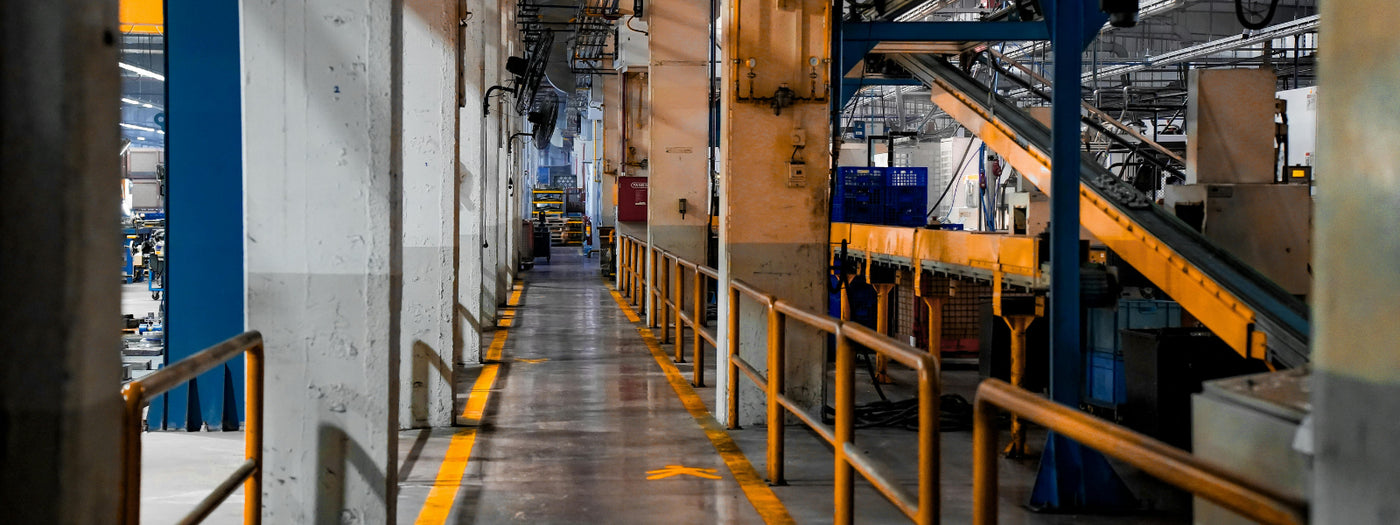
Warehouses and industrial sites are designed for movement, productivity, and scale. Forklifts operate continuously, loading bays open and close throughout the day, and machinery runs for long shifts. While these environments may appear well ventilated, air quality is often variable and difficult to assess without accurate data.
Airborne particulates are largely invisible, yet they pose persistent risks to worker health, site safety, and regulatory compliance. For decision-makers responsible for operations, facilities, or health and safety, the challenge is not simply recognising that air quality matters, but understanding how to manage it effectively.
Continuous commercial air quality tracking provides that clarity. By delivering real-time, site-specific data, it allows industrial environments to move from assumption-based assessments to informed, proactive control.
Air Quality Challenges Unique to Warehouses and Industrial Sites
Large spaces with changing conditions
Warehouses are typically high-volume spaces with complex airflow patterns. Natural and mechanical ventilation changes throughout the day as doors open, vehicles move, and external weather conditions shift. This means airborne pollutants do not disperse evenly or predictably.
A single assessment carried out under quiet conditions may bear little resemblance to air quality during peak operational periods.
Sustained activity and prolonged exposure
Unlike short-term construction tasks, warehouse operations are continuous. Workers may be exposed to airborne particulates for entire shifts, day after day. Even moderate concentrations can become significant when exposure is sustained.
This makes ongoing visibility of air quality essential, particularly in high-throughput environments.
Common Sources of Particulate Pollution
Vehicles and material handling equipment
Forklifts, reach trucks, yard tractors, and visiting HGVs all contribute to particulate emissions. Internal combustion engines are an obvious source, but even electric vehicles can resuspend settled dust as they move through the site.
Machinery, processes, and stored materials
Industrial processes such as cutting, grinding, packaging, and pallet handling release fine particulates into the air. Cardboard, shrink wrap, wood, and bulk materials are common contributors to dust loads in logistics and manufacturing environments.
External pollution entering the building
Open loading bays allow particulates from nearby roads, industrial neighbours, or construction activity to enter the building. Weather conditions such as low wind or temperature inversions can exacerbate this effect.
Understanding Particulate Matter in Industrial Settings
PM10, PM2.5, and PM1 explained
Particulate matter is categorised by size, measured in microns.
-
PM10 particles affect the upper respiratory tract and can contribute to irritation and reduced comfort.
-
PM2.5 particles are small enough to penetrate deep into the lungs and are associated with more serious health impacts.
-
PM1 particles are finer still, capable of reaching the deepest parts of the respiratory system and posing long-term health risks.
In industrial settings, PM2.5 and PM1 are particularly important because they are not visible and are easily inhaled without immediate symptoms.
Why fine particulates are often underestimated
Dust that settles on surfaces is easy to identify and manage. Fine particulates remain suspended in the air, especially in busy environments, and are rarely detected without dedicated monitoring. This can lead to a false sense of control.
Health and Safety Implications for Workers
Short-term effects
Poor air quality can cause eye irritation, sore throats, headaches, and fatigue. These symptoms may seem minor, but they affect concentration, reaction times, and overall comfort, increasing the risk of incidents in safety-critical environments.
Long-term occupational health risks
Repeated exposure to fine particulates is linked to respiratory conditions and can worsen existing health issues. Over time, this contributes to increased sickness absence and potential long-term liability.
Demonstrating duty of care
Continuous air quality tracking supports a visible commitment to worker wellbeing. It provides objective evidence that airborne risks are understood, monitored, and managed, reinforcing trust and confidence across the workforce.
UK Regulatory and Compliance Considerations
COSHH and exposure control
Under the Control of Substances Hazardous to Health Regulations, employers must assess and control exposure to harmful substances, including airborne particulates. While COSHH does not mandate specific monitoring methods, it does require that controls are effective.
Continuous data strengthens risk assessments by demonstrating how conditions vary across time and activity levels.
Expectations from regulators
The UK’s Health and Safety Executive places increasing emphasis on prevention and evidence-based management. Real-time air quality data supports defensible decision-making during inspections or investigations.Logged air quality data provides a reliable historical record. This is valuable not only for compliance audits, but also for reviewing incidents, complaints, or operational changes.
Operational and Productivity Impacts of Poor Air Quality
Performance and error rates
Research consistently shows that air quality influences cognitive performance. In warehouse environments, reduced alertness or discomfort can increase picking errors, slow processes, and raise the likelihood of accidents.
Equipment reliability and maintenance
Dust accumulation affects sensors, conveyors, HVAC systems, and electronic equipment. Understanding when and where particulate levels rise helps target cleaning, filtration, and maintenance more effectively.Without continuous insight, air quality issues are often addressed only after complaints or incidents occur. This reactive approach leads to unplanned downtime and operational disruption.
Why Continuous Monitoring Is More Effective Than Spot Checks
The limitations of periodic assessments
Spot measurements capture only a snapshot in time. They may miss short-lived spikes caused by peak vehicle movement, process changes, or external conditions. Once taken, the data quickly becomes outdated.Continuous monitoring provides immediate awareness of changing conditions. Threshold alerts enable teams to respond before issues escalate, whether that involves adjusting ventilation, modifying processes, or managing traffic flow.
Long-term trend analysis
Over time, continuous data reveals patterns. Managers can identify which activities drive exposure, when risks are highest, and how changes to layout or scheduling affect air quality.
Using Air Quality Data for Proactive Decision-Making
Improving operational controls
Data allows ventilation systems to be run when and where they are needed most, rather than continuously or on fixed schedules. This improves effectiveness while supporting energy efficiency.Rather than relying on assumptions, managers can use evidence to justify specific improvements, such as local extraction, process changes, or revised vehicle routes.Objective, real-time data empowers teams to make informed decisions. It moves air quality management from a compliance task to an integrated part of site safety and operational planning.
From Compliance Requirement to Operational Advantage
In warehouse and industrial environments, air quality is not static. It changes with activity, layout, and external conditions. Relying on occasional checks leaves significant gaps in understanding and control.
Continuous air quality tracking transforms an invisible risk into actionable intelligence. It supports regulatory compliance, protects worker health, and enhances operational resilience. For decision-makers seeking dependable, data-led control of their environments, real-time monitoring provides the clarity needed to manage risk with confidence and precision.
Frequently Asked Questions: Air Quality Monitoring in Warehouses and Industrial Sites
Answers to common questions about continuous air quality monitoring in warehouses and industrial environments, where airborne particulates can vary significantly with activity, processes and operating conditions.
Continuous air quality monitoring involves the ongoing measurement of airborne pollutants using fixed sensors that operate 24/7. Unlike periodic spot checks, continuous systems provide real-time data on particulate levels, showing how air quality changes throughout the day in response to activity, processes and external conditions.
This approach allows managers to identify short-term spikes as well as longer-term trends that would otherwise go unnoticed.
Spot checks only capture conditions at a single moment in time. In warehouses and industrial sites, air quality can change rapidly due to vehicle movement, machinery use or loading bay activity.
Continuous monitoring provides a complete picture. It reveals peak exposure periods, supports early intervention and ensures that control measures remain effective under real operating conditions, not just during inspections.
PM10, PM2.5 and PM1 are all relevant in industrial environments.
PM10 is associated with dust and mechanical processes and can affect comfort and visibility. PM2.5 and PM1 are more critical from a health perspective, as these finer particles penetrate deeper into the lungs and are linked to long-term respiratory risks.
Monitoring all three provides a more accurate understanding of both immediate and cumulative exposure.
UK legislation does not prescribe specific monitoring equipment, but it does require employers to assess and control exposure to harmful substances, including airborne particulates generated by work activities.
Continuous monitoring helps demonstrate that exposure risks are understood, controlled and reviewed over time. It also provides defensible evidence that control measures remain effective, supporting compliance with health and safety obligations.
Real-time air quality data supports practical operational decisions. It can be used to adjust ventilation schedules, manage traffic flow or modify processes during high-risk periods.
Over time, this data helps identify which activities contribute most to airborne exposure, enabling targeted improvements rather than broad, disruptive changes.
Yes. Air quality has a direct impact on comfort, concentration and fatigue levels. In busy warehouse environments, even small reductions in cognitive performance can increase error rates, slow throughput and raise accident risk.
Maintaining good air quality supports consistent performance, particularly in safety-critical or high-volume operations.
Yes. Logged air quality data provides a clear historical record of conditions across the site. This is valuable during audits, inspections or incident reviews, as it allows managers to demonstrate what conditions were like at specific times and how risks were managed.
This level of transparency supports confidence and reduces uncertainty during regulatory scrutiny.
While larger sites often see the most immediate benefits, continuous monitoring is equally valuable in smaller or more specialised facilities. Any environment with regular vehicle movement, machinery use or enclosed workflows can benefit from better visibility of airborne risks.
The key factor is not site size, but the presence of variable activity and potential exposure.